Workshop Title:
Empiricism and Theology: The Double-Barreled Weapon of Colonial usurpation in O.A.
Bushnell's
"The Return of Lono"
Date:
August 18th, 2023 (CDT)
Organizer:
Professor David T. Mitchell in George Washington University
Keywords:
- Hawaiian Renaissance
- Transitional Archive
- OA Bushnell
- The Return of Lono
- Cook's Voyage to Hawaii
Workshop Chair:
Personal Bio:
David T. Mitchell is a founder of Disability Studies in the Humanities. His work along with his partner, Sharon Snyder, serves as a cornerstone of what has come to be known as cripqueer studies. Cripqueer studies foregrounds not only disability as an identity seeking inclusion and rights, but as an active verb exposing the necessity of structural critiques of normativity. Without disability we cannot fully know how marginalized bodyminds understand it, navigate it, critique it, and expose the cracks that define normativity as forms of docility instrumental to belonging. His academic and creative filmwork pursues alternative pathways on which the designation of incapacity often turns into an unexpected capacity. Thus, the marginalization, exclusion, erasure, and destruction of cripqueer lives results in fissures of our cultural knowledge base that must be crossed by intimacies that only disability experience, theory, and the arts can provide. In their first film, "Vital Signs: Crip Culture Talks Back" (1995), Mitchell and Snyder unveiled the alternative interdependencies that inform what they call, crip culture, and deployed those non-normative practices as a critique of the Western myth of independence that is central to liberal humanist formulations of the Human. The film also demonstrated how disability queers all forms of being. In addition to working to found the Disability Studies Committee (now a division) in the Modern Languages Association, he is also co-editor of the longest running academic book series on Disability Studies for the University of Michigan Press: "Corporealities: Discourses of Disability" (1997-present). Published books include: Narrative Prosthesis: Disability and the Dependencies of Discourse (2000), Cultural Locations of Disability (2006), and The Biopolitics of Disability: Neoliberalism, Ablenationalism, and Peripheral Embodiment (2015). Award-winning filmwork includes the aforementioned "Vital Signs", "A World Without Bodies" (2002), "Self Preservation" (2005), and "Disability Takes on the Arts" (2006). He is also co-editor of 3 disability studies collections: The Body and Physical Difference: Discourses of Disability (1997), The Encyclopedia of Disability Volume V: A History of Disability in Primary Sources (2005); and The Matter of Disability: Materiality, Biopolitics, Crip Affect (2019). "Disposable Humanity" will be his first feature-length film release.
Workshop Description:
Background:
The Hawaiian Renaissance has traditionally been portrayed as beginning in the early 1970s as a movement to 1) preserve the Hawaiian language prohibited from being spoken or taught in public education for nearly 100 years; 2) making the unique history of Hawaii both pre- and post-colonialism resurface; and 3) reviving the arts such as the hula. This lecture/discussion will focus on the first historical novel of the period ("The Return of Lono" (1956) by second generation Hawaiian writer O.A. Bushnell. Despite the fact that James Michener claimed his best-selling monolith of the historical novel was not published until 1959 (the year Hawaii was awarded statehood) was the only example of written art on the islands, writers such as Bushnell, Kazuo Miyamoto, and Marjorie Sinclair had published novels about Hawaii and its unique history and culture for at least a decade before Michener's fiction history.
Goal/Rationale:
I intend to show three things: 1) that Michener was wrong in his assessment of his historical novel as being the only novel about the life and history of the islands; 2) the key impulses associated with the Hawaiian Renaissance are already on display nearly 30 years before its recognized beginning in the early 1980s; and 3) that there is what I call a "transitional archive" that opens up and gives fuel to the Hawaiian Renaissance through sharing impulses of historical preservation of Hawaiian (i.e. ancestral Polynesian culture), surfacing with the nearly erased language of ancient Hawaiian sprinkled throughout the English used to tell these tales, and the use of literary techniques of irony and the genre of the historical novel to explain European and American occupation of the islands that began in 1778 with Captain Cook's "discovery" of the island chain.
Scope and Information for Participants:
While the talk will focus on "The Return of Lono", the historical novel will be used to solidify the earliest stirrings of the Hawaiian Renaissance. Unlike most works written in the primary period of literary outpouring that burgeoned in the early 1970s, Bushnell moves between British crew and the perspectives of indigenous Hawaiian people. Along the way he stages a debate between Christian theology and post-Enlightenment science of the kind Cook represented. However, ultimately science is exposed as being no less colonizing than the cultural usurpation of Christian theology. This back-and-forth between theology and empiricism proves that the two ideologies operate as a double-barreled imposition of "soft power" over the indigenous people of the islands. Soft power is defined as a form of colonial cultural usurpation that does not seem violent in its aspirations toward cultural conquest and therefore goes "underground" as an adaptation of military cultural siege on display in other colonial projects such as the conquest of Mexico and the western United States.
Highlights:
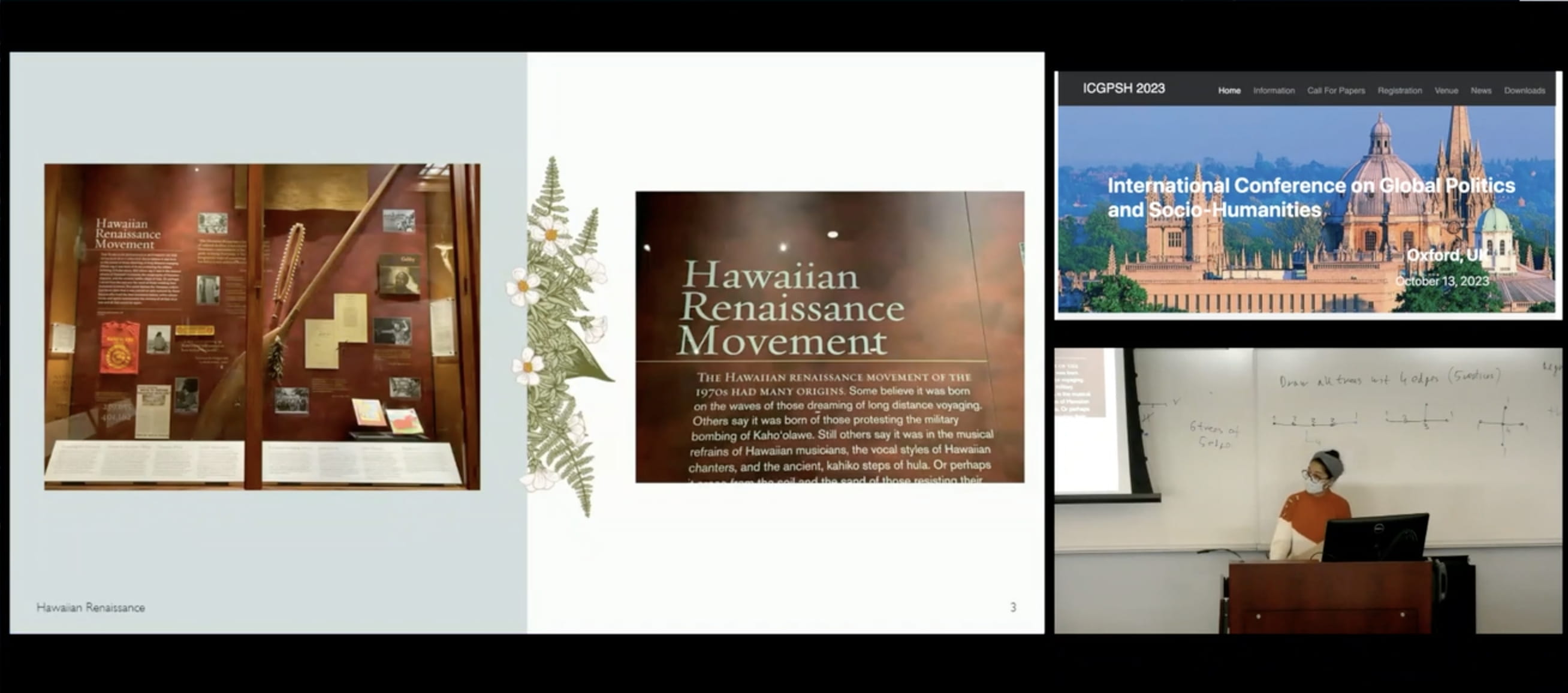
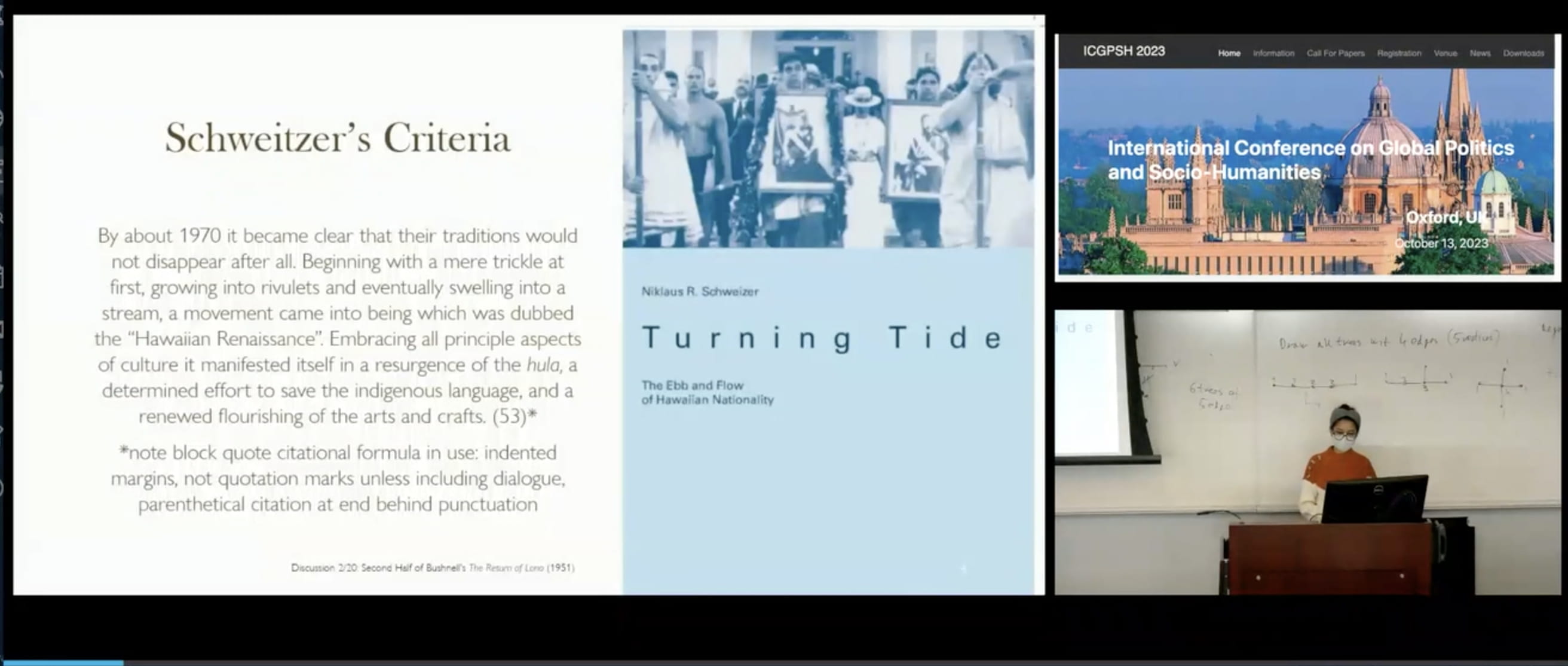
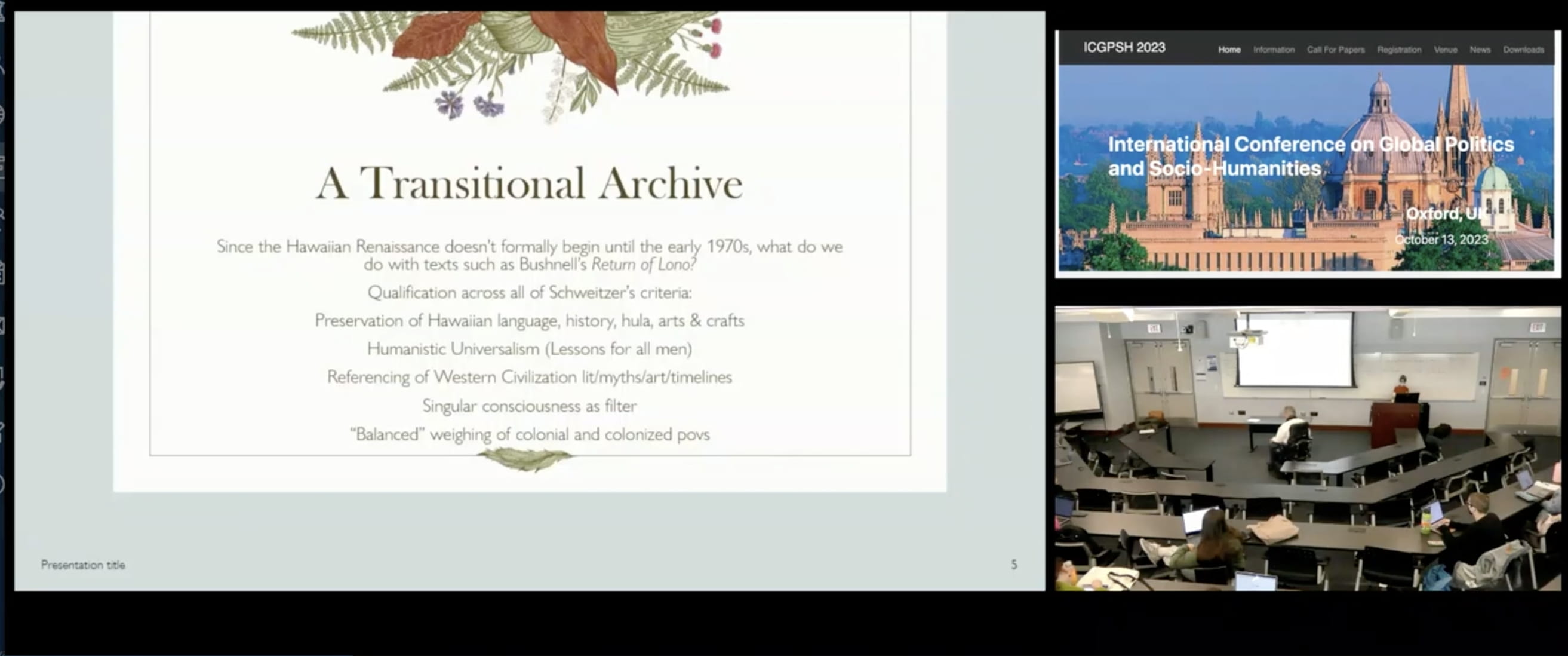

The Hawaiian Renaissance has traditionally been portrayed as beginning in the early 1970s as a movement to 1) preserve the Hawaiian language prohibited from being spoken or taught in public education for nearly 100 years; 2) making the unique history of Hawaii both pre- and post-colonialism resurface; and 3) reviving the arts such as the hula. This lecture/discussion will focus on the first historical novel of the period (“The Return of Lono” (1956) by second generation Hawaiian writer O.A. Bushnell. Despite the fact that James Michener claimed his best-selling monolith of the historical novel was not published until 1959 (the year Hawaii was awarded statehood) was the only example of written art on the islands, writers such as Bushnell, Kazuo Miyamoto, and Marjorie Sinclair had published novels about Hawaii and its unique history and culture for at least a decade before Michener's fiction history.
Access to Workshop:
ICGPSH 2023 Workshop -- Washington - YouTube
Venue:
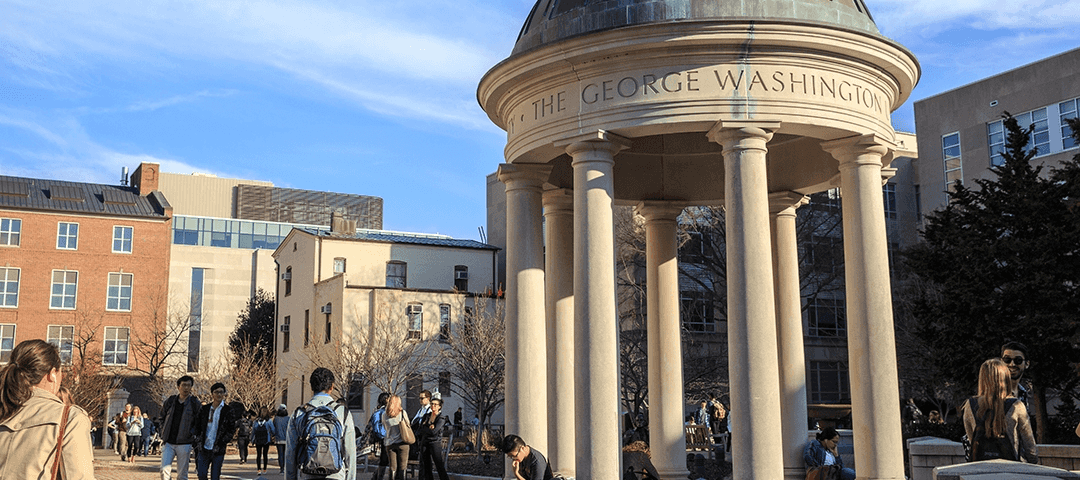
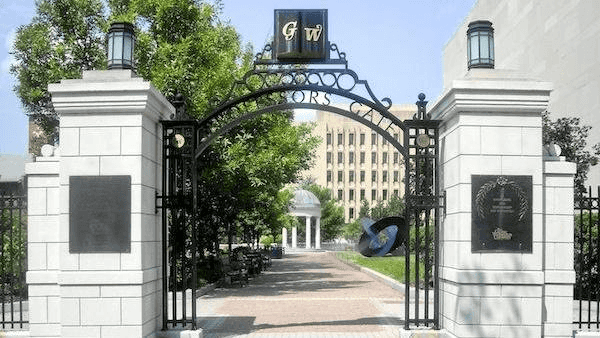
George Washington University, 2121 I St NW, Washington, DC 20052
VISA:
U.S. Visas (state.gov)In order to ensure the information is correct and up to date, there may be changes which we are not aware of. And different countries have different rules for the visa application. It is always a good idea to check the latest regulations in your country. This page just gives some general information of the visa application.
US Visa Information
The B-1/B-2 visitor visa is for people traveling to the United States temporarily for business (B-1) or for pleasure or medical treatment (B-2). Generally, the B-1 visa is for travelers consulting with business associates; attending scientific, educational, professional, or business conventions/conferences; settling an estate; or negotiating contracts. The B-2 visa is for travel that is recreational in nature, including tourism; visits with friends or relatives; medical treatment; and activities of a fraternal, social, or service nature. Often, the B-1 and B-2 visas are combined and issued as one visa: the B-1/B-2.
Application Items
If you apply for a business/tourist visa, you must pay your $160 application fee and submit the following:
- A Nonimmigrant Visa Electronic Application (DS-160) Form. Visit the DS-160 web page for more information about the DS-160.
- A passport valid for travel to the United States with a validity date at least six months beyond your intended period of stay in the United States (unless country-specific agreements provide exemptions). If more than one person is included in your passport, each person desiring a visa must submit an application.
- One (1) 2 x 2 inches (51 x 51 mm) photograph taken within the last six months.
- If a visa is issued, there may be an additional visa issuance reciprocity fee, depending on your nationality.
In addition to these items, you must present an interview appointment letter confirming that you booked an appointment through this service. You may also bring whatever supporting documents you believe support the information provided to the consular officer.
Supporting Documents
- Invitation letter from business or school.
- Detailed CV or resume including a list of publications.
- Complete itinerary, including all meetings, conferences, and visits; include names, addresses, and telephone numbers of your hosts.
- For other materials, please refer to the U.S. Embassy or Consulate website.
NOTICE:
Should your application be denied, the organizing committee cannot change the decision of visa officer, nor will ICGPSH engage in discussion or correspondence with the visa application center on behalf of the applicant. The registration fee CANNOT be refunded when the VISA application of individual being denied.
Important Info
Template:
Key Dates:
Final Submission Deadline: October 06, 2023
Notification of Acceptance: 7-20 workdays
Conference Date: October 13, 2023
Venue:
Oxford, UK
Newcastle, UK
Washington, USA
Austin, USA
Galati, Romania